Zombi – 2006-03-31 Neumo’s – Seattle, WA

April 3rd, 2006

Sometimes you go to a show and the opening band make your eyes glaze over as you wait for them to finish whatever the hell it is they’re doing so you can see the band(s) you paid money to see. This is why people show up at the venue two hours late. Not because they want to look cool but because they hate sitting through craptacular opening bands.

But every so often you show up to a show in time to see the first band play and it’s not a total let down. In fact, sometimes you catch a band that is just as entertaining if not more so than than the headlining act and, let me tell you friends, that’s a golden opportunity right there. The crowd isn’t jam packed full of people and you can actually enjoy being up front listening to some decent tunes.

Friday night I went to see These Arms Are Snakes at Neumo’s (Isis was headlining but… meh) and the opening act, Zombi, proved that the order of the show’s lineup is not indicative of how “good” the bands are. These guys fucking killed. They have a huge sound, epic drumming, and an all around smooth sound.

To describe their sound I will say this: You know those action movies from the 80s that always get shown on network tv on Sunday afternoon? The music that plays while the renegade cop storms the abandon factory that the criminals are using to traffic their drugs. That’s what Zombi’s music sounds like. Synth driven, drum backed, guns-out electronic music that is destined to impress.

Zombi 2006-03-32 Neumo’s – Seattle, WA
Download: zombi2006-03-31.akgc1000s.flac16.zip
MP3 Sample: zombi2006-03-31sample.mp3

(I also recorded These Arms Are Snakes’ set but I promised the drummer that I would not publish the recording or trade it with anyone until their new album is out. Sorry.)


Jason Collett – 2006-03-28 Sunset Tavern

March 30th, 2006

I like the Sunset Tavern. For being a run-of-the-mill bar in the heart of Ballard, it has a certain charm and allure. Sort of cozy and fun. The soundsystem also doesn’t suck and they have enough equipment to mic a full drumset and all of a band’s instruments, so that helps me to like it as well.

The show last night was all around good. The opening band, The Lonely Forest, played to a small crowd of about 20 people (10 of which were their family and friends). They were obviously a young group of kids but the music was good… sort of Counting Crows-ish without the whiney vocals.

Following them was Kimya Dawson whose name you might recognize from The Moldy Peaches. Her solo set is very soothing and comforting to listen to. You know that White Stripes song “We’re Going To Be Friends”? Imagine a whole set of songs like that with funnier lyrics.

A lot of talkers during this set. I’m surprised it turned out as audible as it did given that she’s a very soft spoken singer whose only accompaniment is an acoustic guitar. Even still, the recording is good and worth the listen.

Kimya Dawson – 2006-03-28 Sunset Tavern – Seattle, WA
Download: kdawson2006-03-28.akgc1000s.flac16.zip
MP3 Sample: kdawson2006-03-28sample.mp3

Jason Collett and his band Paso Mino took the stage at 11 and played for a solid 75 minutes. It was nice to have a band play for more than 45 minutes and even come out for an encore (even though the place didn’t have more than 30 people in it).

That’s something I noticed and found rather odd. I came to the show expecting some kind of turn out given that Jason Collett’s other band Broken Social Scene has a huge following of hip kids. The Sunset even marketed the show on their site as “Jason Collett of Broken Social Scene” so I thought a lot of people would come out to the show just to hear what his solo stuff sounds like. To my surprise, the room never filled up as I had expected. I mean, shit, this venue had more people in it when Wolf Eyes played in October.

No big deal, his set was great and I enjoyed it a good deal. Comparing his singing to Dylan is unavoidable so I will say this: His vocals sound like Ben Lee doing an impression of Bob Dylan. This isn’t a jab or anything, just what popped into my head when he first started singing.

The recording turned out nice enough. Some talkers underneath my stand but whatever, I’m not in the business of telling people what to do at shows. I’m almost positive that Calvin Johnson ran the soundboard for this set as you can hear Jason say his name when trying to fix the microphone after the fourth song. After the show the bass player told me they were going to record at a studio “about a half hour away” which might have meant Johnson’s recording studio Dub Narcotic Recording Studios in Olympia (which is really about an hour and a half away from Seattle).

Jason Collett – 2006-03-28 Sunset Tavern – Seattle, WA
Download: jcollett2006-03-28.akgc1000s.flac16.zip
MP3 Sample: jcollett2006-03-28sample.mp3


Part Man Part Horse – 2006-03-25

March 27th, 2006

I figure since I’ve got a new hobby and it’s pretty fun, I should start sharing the fruits of my labor with my best friend, the Internet.

I’ve been taping pretty regularly since January. The list of shows includes:

    The Advantage
    Animal Collective
    Band Of Horses
    Big Business
    Jenny Lewis & The Watson Twins
    Minus The Bear
    These Arms Are Snakes

Most of these recordings turned out pretty well. I’m amazed at how easy it is to set up my equipment and pull a pretty good tape without really knowing all that much about audio and not having spent thousands of dollars on my equipment. I’m also really getting into taping local bands at smaller venues. I don’t know why but it’s cool to record something like that… it feels more like I’m doing a service to the city’s music scene by preserving local shows than it does when I record a band that is just touring through town.

Bearing that in mind, I’ve decided to upload my recording from Saturday night. Part Man Part Horse opened up for some touring bands at The Funhouse and I captured the aural magic. Gary was in top form and stoned out of his gourd as far as I could tell. He ran around the venue, threw water at people, called the crowd “stupid” on multiple occasions, and generally did his thing.

And now it’s your turn to share in that magic.

Part Man Part Horse – 2006-03-25 The Funhouse – Seattle, WA
Download:
MP3 Sample: pmph2006-03-25sample.mp3

All of these files are in FLAC because that is how I roll. Mac users will have to decode to WAV in order to get them to work I imagine (just use xACT) and Windows users, well…. Foobar2000 ver .9 just came out so go and get that and ditch Winamp for a change.


My new hobby.

January 24th, 2006

I sure do like buying stuff. I don’t enjoy materialism without purpose, though. I like buying nice stuff that I can use (or that will be worth metric truckloads of money in the future) and, just recently, I did that.

See, my new hobby is recording live concerts. Like most hobbies I take up, I spent a few weeks reading hundreds of forum threads on the Internet until I had a good idea of what equipment I needed and what I could realistically afford.

For situations where I would need to record shows “on the downlow” (as the kids say) I built a “stealth rig” consisting of the following components:

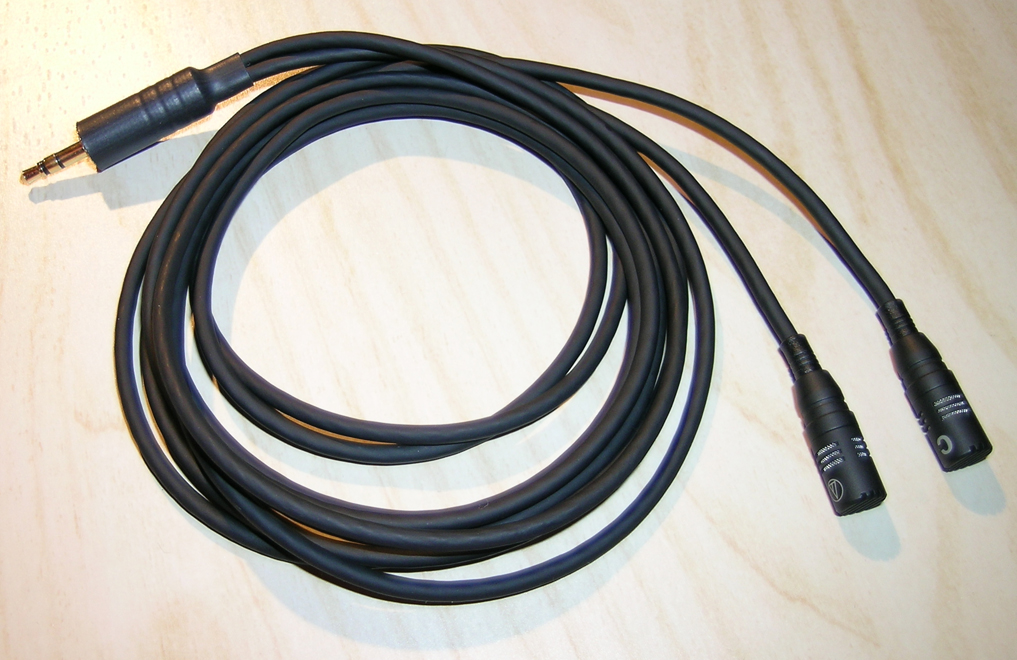
1) Sound Professionals CMC-8 microphones

These mics use the Audio Technica 943 capsules and terminate with an 1/8″ stereo plugin. They’re also tiny as hell.

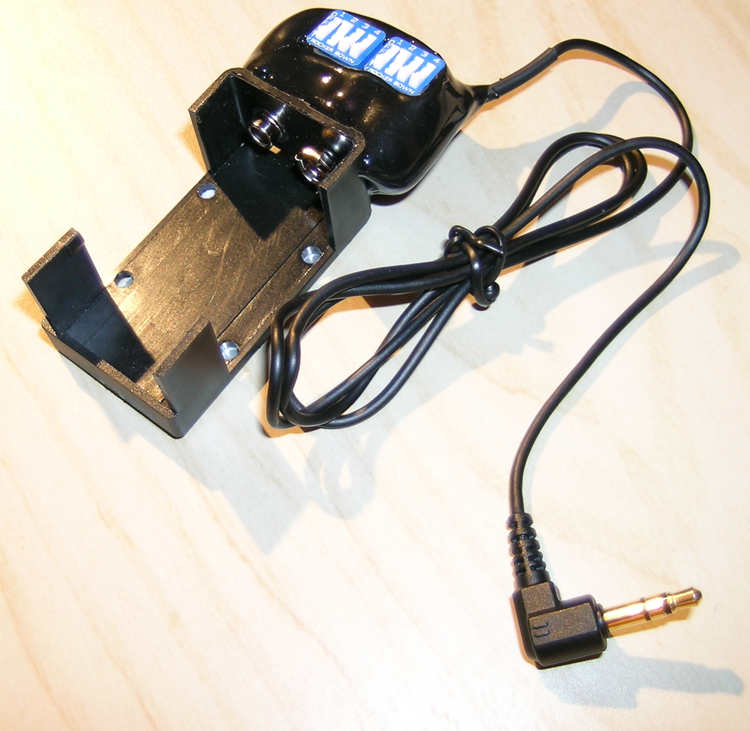
2) Sound Professionals SPSB-6 battery box

This 9v battery box powers the mics (since they can’t take be powered with 48v phantom power) and also has a bass roll-off option to cure the mics of being too boomy. I usually roll off the left and right channels at 107Hz.

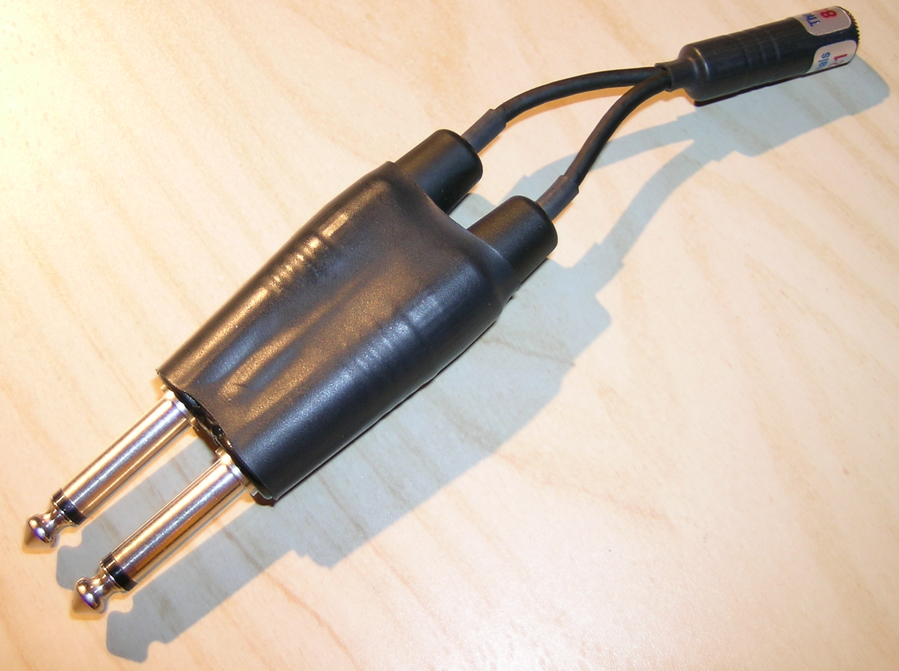
3) Sound Professionals 1/8″ to TRS dongle

This dongle converts the 1/8″ termination of the battery box into two 1/4″ TRS (tip-ring-sleeve) terminations.

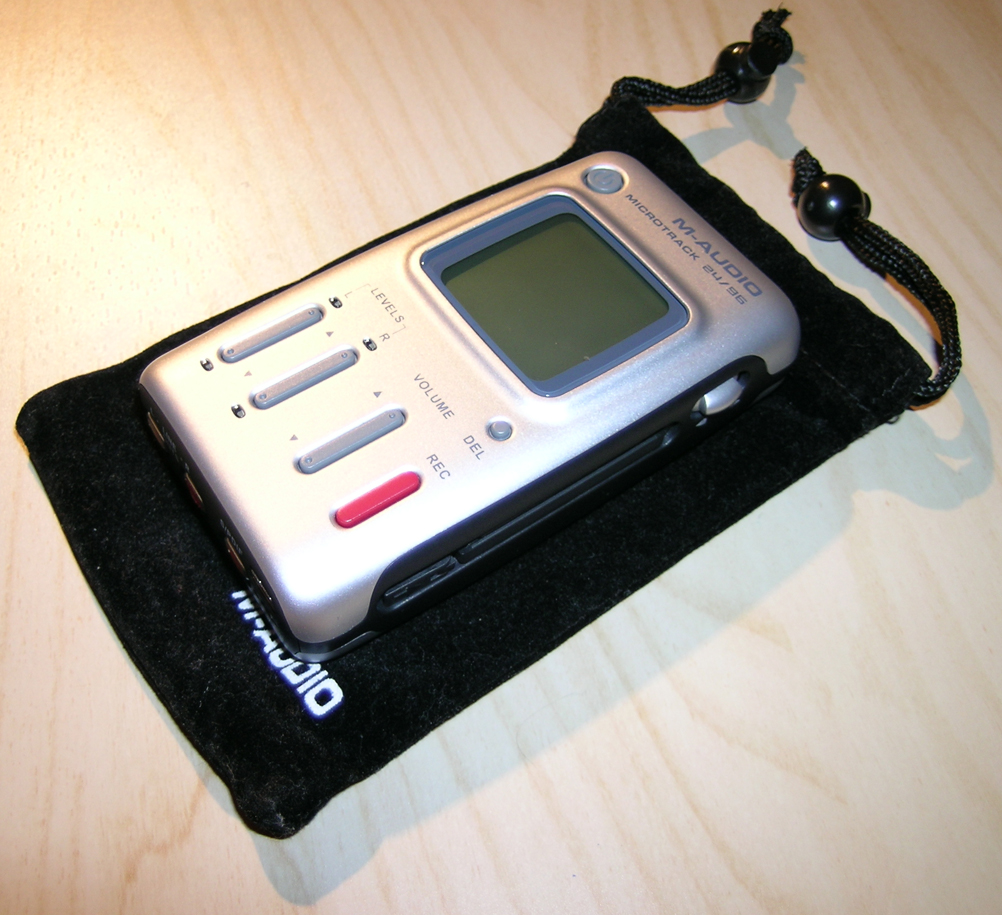
4) M-Audio Microtrack 24/96

This is the real beauty of the setup. The Microtrack takes care of the analog to digital conversion stage and records to compact flash or a microdrive (at up to 24 bit-depth and 96 kHz sample rate). It really is a versatile device as it can record through digital coax if you have an outboard A/D converter and can be powered remotely via USB if you need to record for hours at a time.

That’s my covert ops recording setup. I also dropped some cash on an “open rig” for situations where both the venue and the band are cool with people recording the show. With an open setup you can add more pieces of equipment to the rig without having to hide it in your pants and, hopefully, end up with a better sounding recording than if you were recording on the sly. Here is what I’m curently using for open-tape situations:

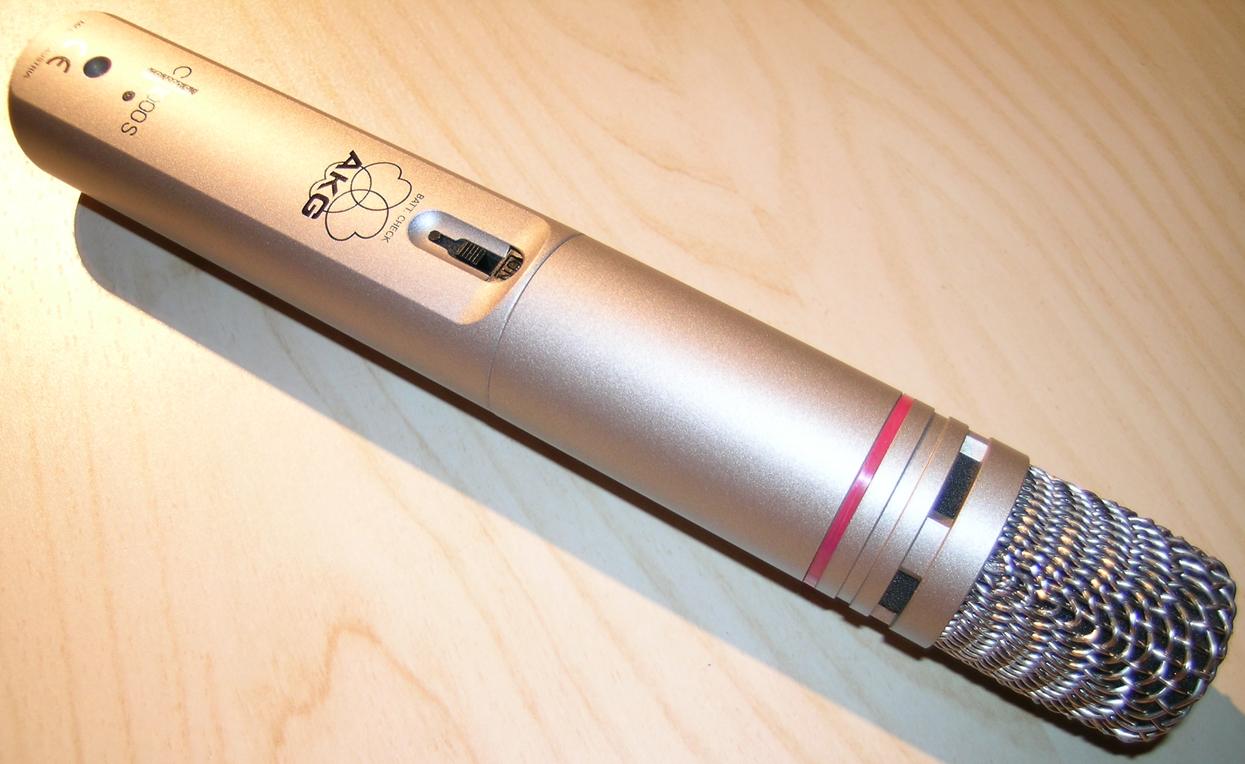
1) AKG C1000S microphones

These are very much the “newbie taper” microphones, but for the price they get the job done very well. I recorded a friend’s band with them a few weeks ago and was amazed at the clarity they provided.

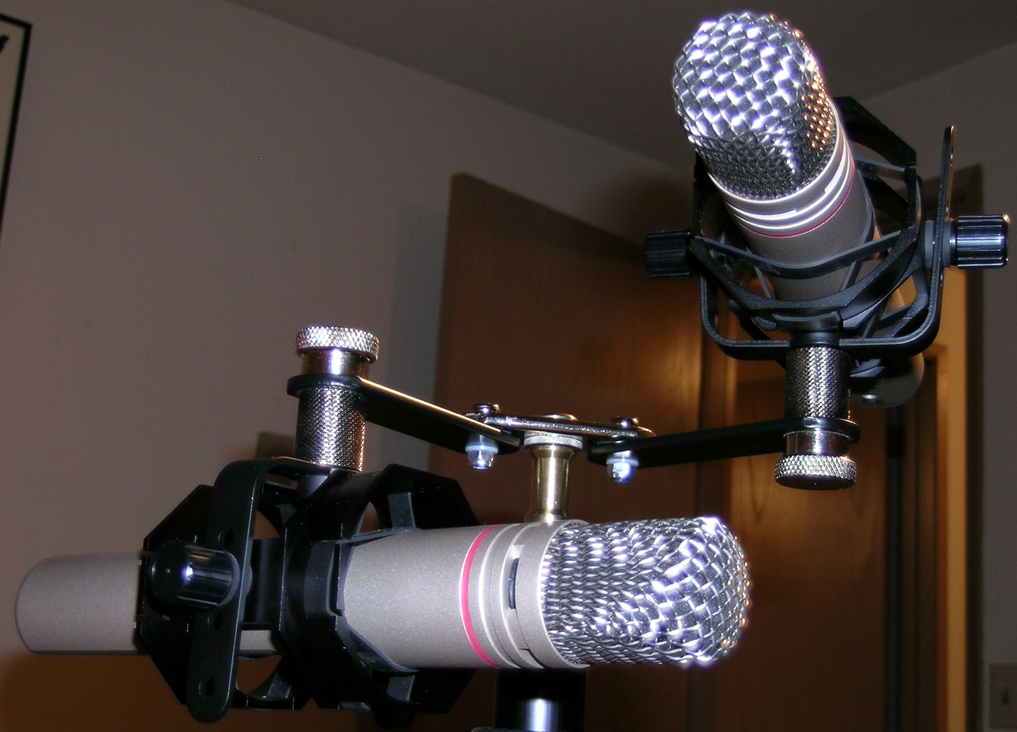
Each microphone is mounted in an Audio Technia 8415 shock mount which suspends the mic in an elastic cradle in case the mic stand is bumped during recording.

For various microphone configurations (which, as I’ve come to find out, there are an abundance of) I bought an AKG stereo bar which will easily allow me to set up the mics in HRTF, X/Y, DIN, AB, etc etc. The stereo bar mounts on a 10′ air cushioned light stand I bought at Glazer’s. See my lack of mic config know-how here.

2) Edirol UA-5

This device handles the mic power, gain, and A/D conversion stage. It provides the microphones with 48v of phantom power and allows for individual control of left and right gain. It outputs analog via RCA or digitally via digital coax or optical.

I bought a modified version of this unit from the TapersSection.com used equipment forum. It was modified by Doug Oade to have a transparent gain stage and a lower noise floor. It also has the Oade Plus Mod which alters the power supply and analog stage of the unit to increase detail and decrease noise.

To power this unit in the field, I went to RadioShack (which is lovingly referred to as “Rat Shack” in the taping community. It’s like the Micro$hit of the taper world.) and bought a li-ion battery and some of their Adaptaplugs (B plug for the battery end, M plug for the UA-5 end).

3) M-Audio Microtrack 24/96

Once again, running into the Microtrack but insead of using the TRS inputs I can use the S/PDIF digital coax input (running digital out from the UA-5).

I’m powering the Microtrack using the same model battery that powers the UA-5, but I had to get a voltage regulator to feed the unit 5v intsead of 9v. A member of TapersSection.com makes such a unit he calls The Juicebox. I got a used Juicebox from a TS.com member and it works just great.

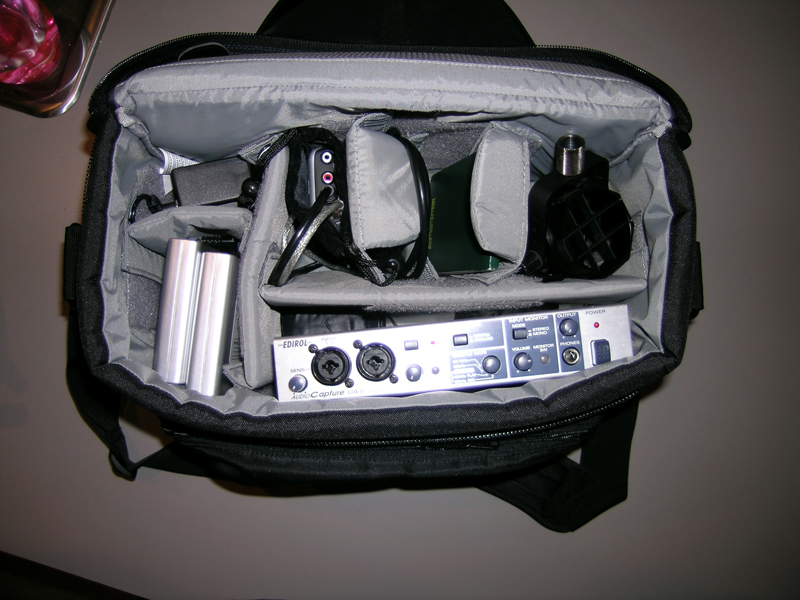
For all of this gear, I have a a Lowe Pro Nova 5 camera bag. I still don’t have a solution for storing the microphones, though. The C1000S is a lot bigger than most field mics so it’s hard to find something to store them in that is low-profile. Here is my bag all packed up (sans the XLR cables).

Cold Killer: More Thoughts

January 11th, 2006

I’ve been busy. Boy howdy have I ever. I’ve successfully pared down three of my jobs to two without taking an income hit so I have plenty of time to sit around and work on this book.

I’ve decided to scrap my original layout mock-up. It was too easy to lose the focus of the book by futzing with captions and multiple images per page. My new idea, inspired by comments two friends of mine made, is to have each page speak for itself. Every page will be a full-sized image without text (save for the header and the page number).

Secondly, I’ve chosen to make the table of contents as much a visual part of the book as the photos. I am going to illustrate the contents of the book on a map of Seattle with each page represented by a numbered circle on the map. The location of the circle will correspond to where in the city the photo was taken and the number will tell you what page to go to. It’s like a choose-your-own-adventure of glorious street art!

I am going to try my hardest to make a presentable electronic version of the book. I don’t mean a simple PDF (though there will be one of those), I’m talking about a full-fledged Flash version of the book with animations and sounds and such. I don’t know Flash but I’m willing to learn (or, at the very least, find someone else to do this for me). I just want something people can look at and enjoy without having to bind hundreds of copies of the finished physical product.

Finally, I have spent a lot of time looking at digital processing techniques to make the images pop out of the page. I really like the way the photos shine when they’re processed to look like they were taken with a Lomo camera, so I believe I am going to edit them to look as such. Here is the before image and here is the after. If you have any other ditigal editing techniques, opinions, tips, or criticisms for me, please let me know!


Beware of the Walls. My Journey Into Book Binding.

October 17th, 2005

I’ve written about Cold Killer often on other sites. I’ve even put up an entire photo album of Cold K tags on Flickr. I think more people should know about this. Judging by the amount of Cold K photos on Flickr, I’m not the only one who feels this way.

My fascination with these ubiquitous ghosts began in the fall of 2004 when I began noticing them all over the city. Sure, there were other taggers painting all over Seattle, but Cold K’s expressionless ghosts were identifiable, noticeable, and varied enough in style that they didn’t become boring. I imagine that if I owned property in the city I wouldn’t be too fond of graffiti artists but, since I don’t, and since I’ve always been a big fan of culture subversion, Cold Killer is my favorite tagger in Seattle.

So I began photographing.

I had a photography class last year during my senior year of college. I took that as an opportunity to splurge on a decent digital camera and started on my quest to document this art.

His art quickly became my own as I logged hundreds of photographs of these subjects using varying angles, exposures, and frames. It’s amazing how much more you will shoot given the digital age’s no-cost media.

I turned in my Cold Killer documentation as a final project in the introductory photography class, but felt like the project remained unfinished. I wanted the photographs presented in a more suitable manner. I wanted the documentation to manifest itself in something more tangible than a photo portfolio.

The idea for a book was born. At the moment, I am making that book.

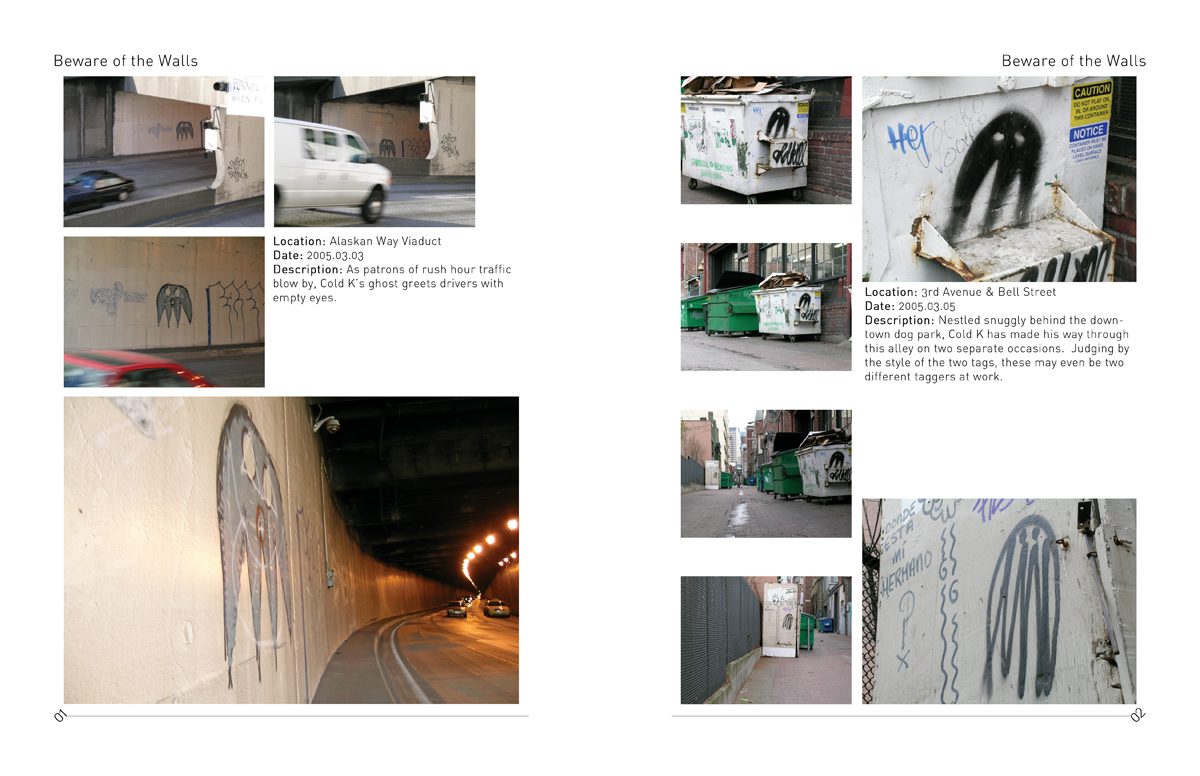
I began laying it out last night like I promised myself I would. Here is an initial mock up of two example pages: mockup.png.

The layout process is rather tedious, but I’m quickly learning to employ the use of guides and snap-to grids in Photoshop. The pages are laid out on a tabloid sized template in landscape mode. After alotting the proper amount of paper for margins and binding, each page should end up being 7.25″ x 10.50″. I want the book cover to be constructed of something unusual… like plywood or something. There’s no end to what you can do with a book made out of plywood.

Oh, yeah. I’ve never made something like this before in my life. I really have no idea what I’m doing. I figure after countless hours of laying out pages and building this labor of love, I will, inevitably, transcend both space and time in a flurry of misplaced rage.

Keep an eye out, I’ll post updates on my progress as it happens. It will happen, I promise.


A Computer In My Living Room: The Software

August 27th, 2005

There is a rift between this post and the one before it. The reason? Computer hardware is a wily beast that I have yet to tame. I guess I could write a post about my adventures with Newegg’s RMA system, but I won’t, so don’t expect to read about that. Seriously.

I outlined the hardware residing in my living room in my previous post and now I will bore you with the minute details concerning the software portion.

The computer runs Windows XP Professional with all the graphical hoopla turned down to a minimum. No fancy shadows or crazy animations. Menus don’t “slide” or “fade” into view.

On top of Windows XP is Litestep. I’m using Litestep as the desktop shell for a few reasons. First, it saves RAM. I’m not loading up an intricate theme, so all Litestep needs to load is the following:

  • Jdesk (desktop environment)
  • xPopup (popup menu)
  • xLabel (graphical element)
  • LsLua (lua scripting module)
  • xTray (system tray)
  • A second reason for using Litestep is that it lets even the most base computer user (such as myself) write scripts and create widgets without having an in-depth knowledge of programming or coding. I will explain that now.

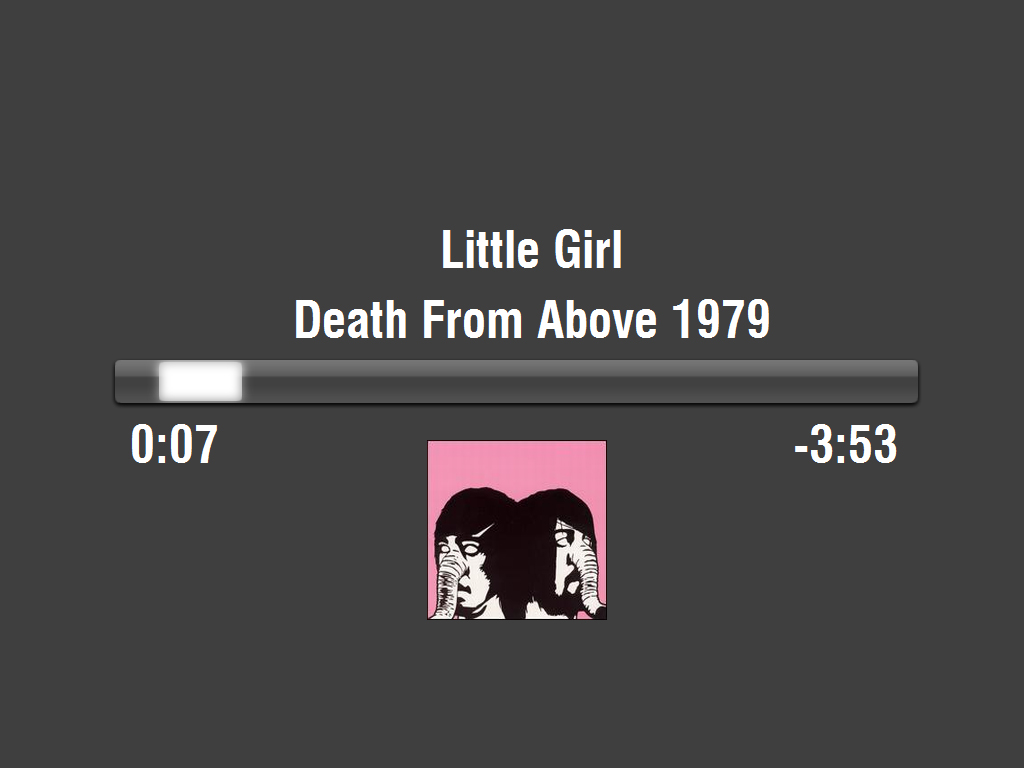
    The concept behind the interface on the couch-side monitor is that when I’m not actively using the computer, it shows an easily readable display with relevant song information such as the artist, the song title, and the album cover. I based this interaction model on whether the mouse was actively being used or not. When the mouse is idle for a specific interval, the UI takes over the screen and shows the information and when I move the mouse the UI goes away and I can manage the playlist and song database.

    The script proved to be something I couldn’t figure out, so I commissioned a friend of mine to write it for me in LsLua. Here is the code he came up with:


    MOUSE = {
    x = -1,
    y = -1
    }

    IDLE = {
    current = 0,
    limit = 15 --in seconds
    }

    function unidle( x, y )
    if x == MOUSE.x and y == MOUSE.y then
    IDLE.current = IDLE.current + 1
    if IDLE.current > 999999 then IDLE.current = 999999 end
    else
    IDLE.current = 0
    exec( '!LabelHide Playlist' )
    end
    if IDLE.current == IDLE.limit*4 then
    exec( '!LabelShow Playlist' )
    end
    MOUSE.x, MOUSE.y = x, y
    end

    It works like a charm and does exactly what it’s supposed to. Thanks for the help, tnl. I set up the script so the “time out” for mouse movement is 15 seconds. And after 15 seconds, the screen displays something along these lines (graphics c/o Scott Prindle):

    MediaPC UI

    As you can see from this screen capture, the UI displays the song title and artist centered above a progress bar. Below the progress bar is a time elapsed/remaining label and even farther below that is a medium-sized album cover.

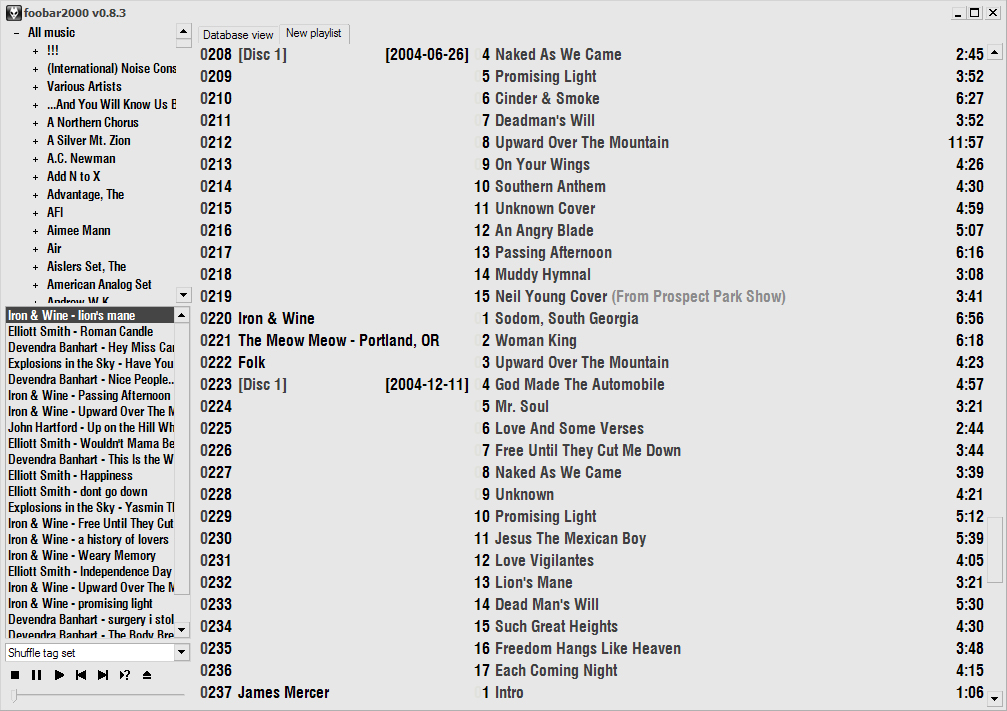
    When the mouse is moved, this is what I see:

    MediaPC Foobar Config

    The computer runs Foobar2000 to output the tunes. Loaded components include:

  • foo_ui_columns (modded Azrael config)
  • foo_uie_volume
  • foo_uie_albumlist (config by tnl)
  • foo_uie_history
  • Using this interface, I can navigate through songs by artist or by album and queue them up as I see fit. Right now it’s just a large mess of my music which ranges from Belle and Sebastian to Motorhead to The Blood Brothers to Elliott Smith. Skipping between genres that large is often quite jarring and I need to find a better way to organize these things (thinking about adding one more level to the hiearchy of foo_uie_ablumlist to sort by genre first, then artist/album).

    So that, my friends, is that. It’s a tight ship I run and by that I mean don’t fucking touch my computer or I’ll kill you and your immediate family. Also, when I say “ship” I really mean “living room”. Just clearing all of this up for you.


    A Computer In My Living Room: The Hardware

    July 7th, 2005

    Upon graduating from Seattle University this June, I moved into a new apartment. My girlfriend graduated from a different university and moved into the new apartment with me. You might say it’s “our apartment”. People probably reference it as “Brian and Rachel’s Apartment” when they speak of this place in conversation, I’m certain of it.

    Let’s get to the point here. We have this apartment and we want it to look nice. She and I outfitted the place with choice elements from Ikea and Craigslist Postings. The apartment shaped up nicely. Take a peek, won’t you?

    Snapshot One
    Snapshot Two
    Snapshot Three

    All of the furniture, save for the couch, is from Ikea. God help me. But what is that couch-side monitor doing? What is its purpose? Why would I have a monitor next to my couch? Media PC baby. I’m talkin’ ’bout a Media PC.

    Now, this is a limited configuration. I refuse to watch movies that come from the s-video output of a video card. I’m not an animal. I don’t eat my own crap. Until I can afford to purchase a projector for my living room this computer is solely for audio and I’m completely fine with that since I have a metric ass-load of music to listen to including over three hundred bootlegged live shows.

    The computer itself isn’t anything out of the ordinairy. I’m not going to spend thousands of dollars building a computer that is just going to run Foobar2k and Litestep. Here are the parts:

    Case: Antec Overture Piano Black ATX Case
    Motherboard: PC CHIPS V3.1C Socket A (Socket 462) VIA KT266A
    Processor: Athlon XP 2400+
    RAM: WINTEC 512MB 184-Pin DDR SDRAM Unbuffered DDR 400 (PC 3200)
    Video Card: MSI RX9550-TD128 Radeon 9550 128MB
    Sound Card: CHAINTECH AV-710 8 (7.1)
    Optical Drive: LITE-ON Black 16X DVD-ROM 48X CD-ROM
    Hard Drives: 120 GB and 160 GB Maxtor drives I had lying around.

    If you look at the contents of the entertainment center of those pictures, you can spy the computer nestled snugly underneath my tape deck. Look at how smoothly that blends in with the other components. It’s almost a crime how nice this looks.

    As far as the audio is concerned, the sound card I purchased for a mere twenty-five dollars came with an optical audio cable and since my receiver has optical inputs on it, I felt it was a sign from God. The fact that my thrift store bookshelf speakers sound so damn good are testament to this divine intervention.

    In order to interface with the computer visually, I hemmed and hawed over a solution for a few days. I sure as hell wasn’t going to browse through files using my television (no matter how big I made the font, it’s just not going to happen). I almost bit the bullet and bought an LCD projector when Woot had a good deal on an InFocus refurb, but I went with my better judgement and refrained from the debt-building purchase.

    I really didn’t want to disturb the beautiful dual monitor setup I had going in the office, but I think it’s for the best. I lifted one of the monitors from my desk and put it in the living room on the couch-side coffee table we bought. I ran a longer-than-necessary VGA cable from the monitor, under the couch, under the area rug and into the computer (along with an extension cord) and everything was good to go.

    Now, to actually interact with the computer I need to decide upon a proper input device. I didn’t want a keyboard sitting out on the coffee table (wireless or otherwise) but I don’t mind an unobtrusive mouse sitting on the table, so I went with a Bluetooth mouse. If someone can explain to me why all Bluetooth devices must a) be blue and b) be shaped like a tooth, I’m more than happy to hear the reason(s) why.

    Finally, I didn’t want to string a cat5 cable across my apartment because I did that in my old place and it looked like I lived in a college dude’s house (because, well, I did). I’m an adult now and I have standards. I got a cheap-ish USB 802.11g wireless dongle and it sits snugly behind the television set.

    So I have my computer built, I have my monitor solution, and I have an input device that works well. What about the software? What do i do for a media-browsing/playing solution? I guess you’ll have to read the next installment for that because I’m not even done developing the system I’m going to use yet.


    Concept? There’s a concept?

    June 3rd, 2005

    There are so many things I want to learn how to do that seem so daunting and complex. Of course, if I were to view my current self as a young 16 year-old I’d say to myself “Wow, I’m really smart! Look at all of this stuff I can do when I’m 21!” because the things that I know how to do now (HTML, CSS, Litestep, etc.) were such foreign concepts to me back in those days that they seemed nigh impossible to fathom.

    Most things aren’t as complex as they first appear and once you strip away the details and look at the skeleton of a process or system, it’s fairly simple to wrap your mind around how they work. The trick to doing this is conceptualization.

    Conceptualizing a complex idea is sometimes harder to do than it should be. As humans, we tend to overcomplicate things and look too closely at the finer details thinking that we have to understand every little thing before we can begin to grasp the big picture. Really, the situation is exactly the opposite.

    The next time you’re struggling to understand a new idea, strip away all the details. Look at the concept behind what you’re doing. Stop trying to figure out how to get something to work for a specific task and take a look at why you’re trying to get it to do that and what consequences this task has on the large scheme of things. If you can understand the concept of something, all of the details will fill themselves in and make a lot more sense.

    Let’s take Litestep for example since I’m pretty good at explaining the concept with an apt analogy. Litestep, as an executable, is simply the brain of the shell. It can’t do anything on its own but it can handle the bang commands and scripts which are the thoughts. So what’s a brain without a body? Nothing.

    That’s where the modules come in. Litestep is the brain and the modules (such as xlabel, rainmeter, lsxcommand, and taskbar3) are the appendages that get stuff done. A Litestep theme’s scripts (thoughts) are processed by the Litestep.exe (brain) and whatever changes made are reflected by the modules (appendages).

    It’s this sort of conceptualization that makes it hundreds of times easier to understand how Litestep works. When you look at it this way, it’s so much easier to locate the problem when something breaks or figure out how to add a feature to a theme.

    The point of this is to encourage people to stop looking at everything with a finetooth comb and step back. Forget all the details and look at the big picture. It will make understanding complex systems so much easier and you will actually learn how to learn if you can imagine that. Just give it a shot.


    Context is Key

    May 20th, 2005

    Context gets lost over time. People forget why certain things were so important either because they weren’t alive or no one really explained it to them.

    I have a friend who thinks The Beatles are the most overrated band in music history. He doesn’t like any of their music and doesn’t understand why they have such a following. The fact that he doesn’t like their music is a reasonable claim but the key to understanding why The Beatles are as popular as they are is to look at the context of their albums; to see why people were so blown away.

    When Sgt. Pepper’s Lonely Hearts Club Band came out in June of 1967 there was nothing like it. Previous to this album there had been nothing else that ventured this far into the realm of pop music and tested what it could really sound like. If this album were released today, Pitchfork would write it off as a pop album worth a listen but nothing stellar or groundbreaking. The thing to remember is that this album came out nearly forty years ago. It set the standard for what an experimental pop record could sound like without alienating the listener. Without this album, there would be no Franz Ferdinand, The Strokes, or Radiohead. Well, ok, that’s arguable but it’s safe to say the face of music would be vastly different than it is today if it were not for The Beatles and albums like Sgt. Pepper’s and Revolver

    A second example of lost context is the work of Albert Einstein and the theory of general relativity. You can see his famous equation E=mc² all over the place. In office supply advertisements, commercials on tv, television shows… it’s everywhere and has been for years. I’d wager that E=mc² is the most recognizable mathematical equation in regards to authorship and it probably always will be.

    Parellel to this, I’d wager that most people who can point out that E=mc² is Albert Einstein’s equation wouldn’t be able to tell you what the variables stand for or what the equation represents as a whole. The meaning of the equation has been lost and Albert Einstein is nothing more than a pop culture icon to be put on t-shirts and coffee mugs.

    See, Einstein’s postulation of the theory of general relativity overturned about six hundred years of Newtonian physics. Not only that, Einstein basically said “I have this theory that explains the nature of the entire galaxy, nay, the universe and you know what? We can test it during this next eclipse and see if I’m right!” (say it in a German accent, it’s more fun that way).

    Einstein was, in fact, right and is the most famous physicist since Newton himself. It’s important to remember the context, though. It’s important to realize that while we take the notion of relativity for granted, at the time it was a very radical and new idea.

    I guess what I’m saying is; try and encapsulate anything you examine in its own context, especially when that event/place/person/thing exists in a certain time period that you yourself may not have experienced. Context is the key to understanding the world and why things are the way they are.

    Well, context and conceptualization. Read my next entry for my thoughts on conceptualization.